This course introduces learners to ATLAS.ti, a powerful qualitative data analysis software used to organize, manage, code, and interpret qualitative research data. Participants will learn how to work with different types of data, including interview transcripts, documents, audio, video, and images. The course covers essential techniques such as coding, categorization, theme development, and data visualization to identify patterns and meaningful insights. Through practical exercises, learners will develop the skills needed to conduct systematic qualitative data analysis and support evidence-based research.
- Teacher: Nepal Library Association
Course Summary: Quantitative Data Analysis Using SPSS
The Quantitative Data Analysis Using SPSS course is designed to develop learners' knowledge and practical skills in analyzing quantitative data using the Statistical Package for the Social Sciences (SPSS). The course introduces fundamental statistical concepts, data management techniques, and analytical methods essential for conducting research and interpreting numerical data.
Participants will learn how to enter, organize, code, clean, and manage datasets in SPSS, perform descriptive and inferential statistical analyses, and interpret statistical outputs. Key topics include frequency distribution, measures of central tendency and dispersion, cross-tabulation, correlation, regression, hypothesis testing, and other commonly used statistical techniques.
Through practical exercises and hands-on activities, learners will gain confidence in using SPSS to analyze research data, interpret findings, and present results effectively. By the end of the course, participants will be better equipped to apply quantitative data analysis techniques in academic research, dissertations, institutional studies, and evidence-based decision-making.
- Teacher: Nepal Library Association
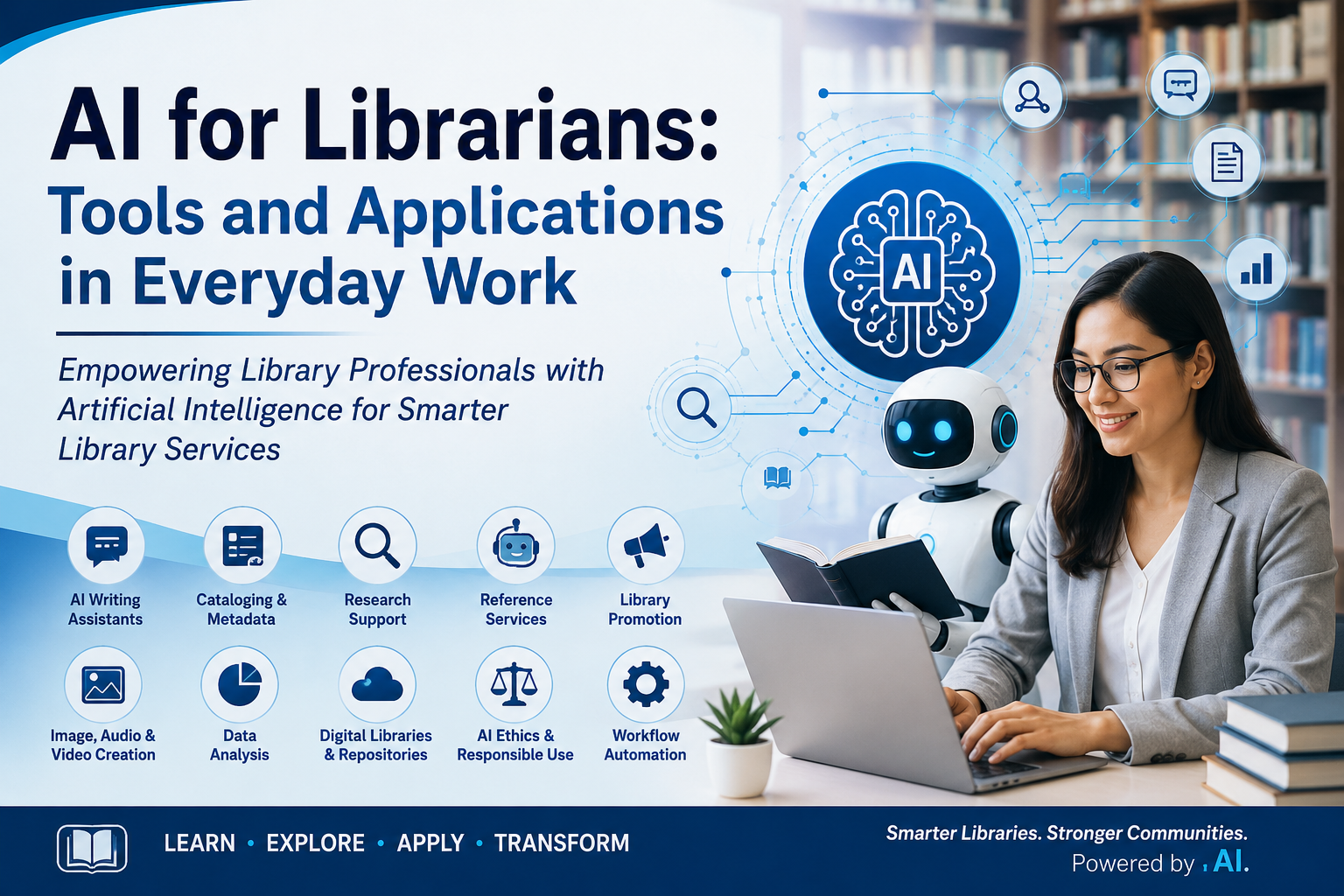
Course Title: Practical AI for Librarians: Tools and Applications in Everyday Work
Course Overview
Artificial Intelligence (AI) is rapidly transforming how libraries manage information, support users, preserve knowledge, and deliver services. This practical, hands-on course is designed specifically for librarians, information professionals, knowledge managers, and library science students who wish to integrate AI tools into their daily professional activities.
The course focuses on real-world applications rather than technical programming. Participants will learn how to use AI tools for reference services, cataloging, metadata creation, research support, content development, digital libraries, knowledge management, scholarly communication, and administrative tasks.
- Teacher: Nepal Library Association
Course Description
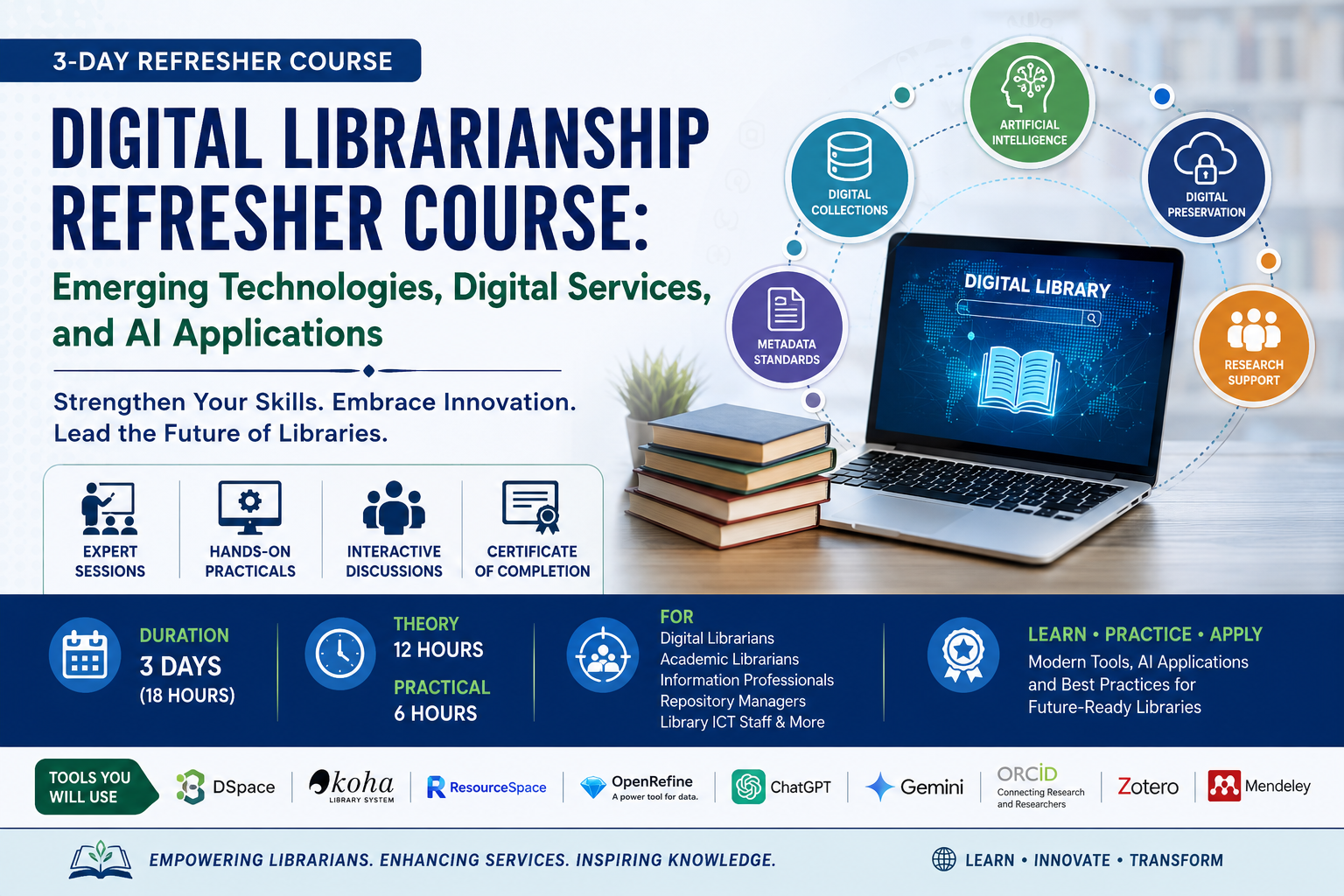
The Digital Librarianship Refresher Course: Emerging Technologies, Digital Services, and AI Applications is a comprehensive 3-day (18-hour) professional development program designed to update the knowledge and practical skills of librarians and information professionals in today's rapidly evolving digital environment. The course explores current trends in digital librarianship, metadata standards, digital repositories, digital preservation, research support services, open science, and the transformative role of artificial intelligence (AI) in modern libraries.
Through a blend of expert-led sessions, hands-on practical exercises, case studies, and interactive discussions, participants will gain practical experience with leading digital library technologies and tools, including DSpace, Koha, ResourceSpace, OpenRefine, ORCID, Zotero, Mendeley, ChatGPT, Gemini, Claude, Perplexity AI, and NotebookLM. Participants will also develop strategies to strengthen digital library services, improve research support, and implement innovative, user-centered solutions within their institutions.
This refresher course is suitable for digital librarians, academic librarians, information professionals, digital repository managers, knowledge managers, library ICT staff, and documentation officers working in university, research, government, special, and public libraries. It can be delivered in face-to-face, online, or blended learning formats through the Moodle Learning Management System (LMS). Successful participants who complete all learning activities and assessments will receive a digital certificate of completion.
If you plan to publish this on Moodle, I can also prepare a short 100-word version for the course homepage and a promotional version for your website or brochure.
- Teacher: Nepal Library Association
Course Overview
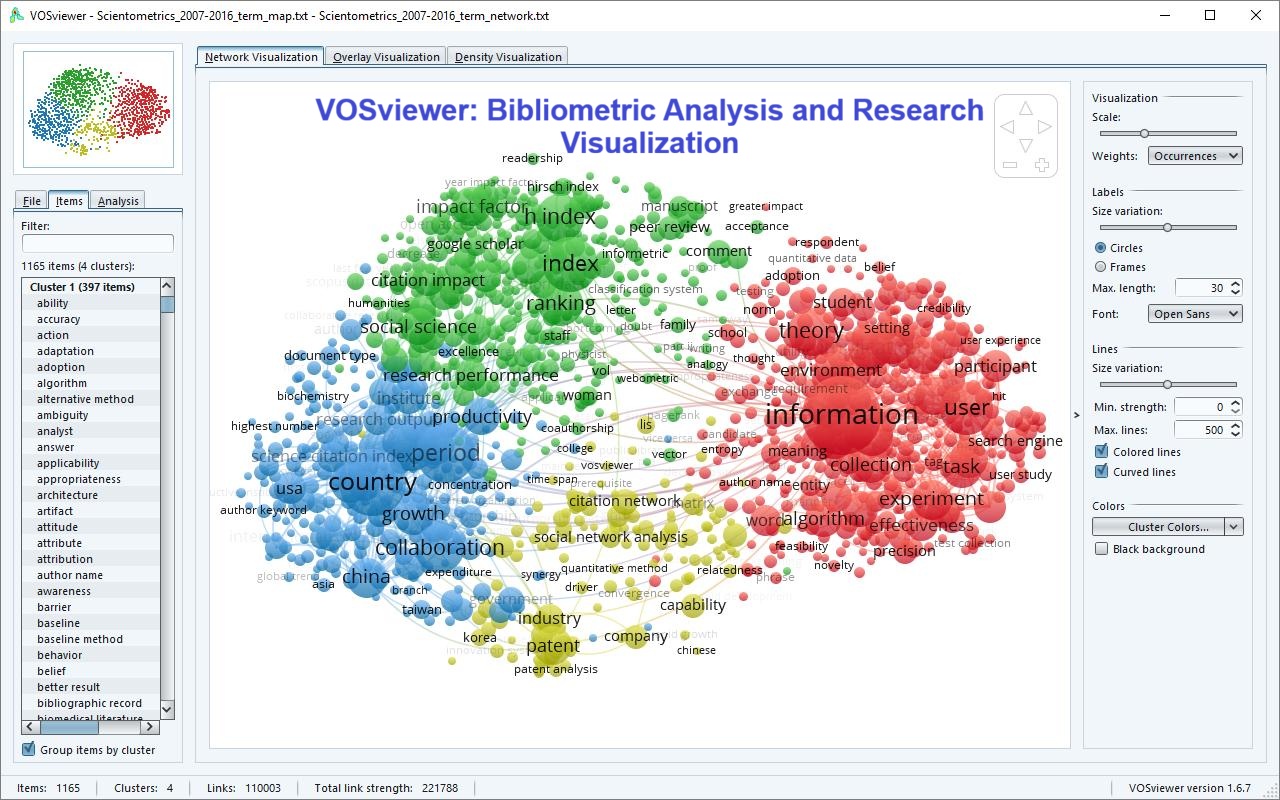
This five-day intensive training programme is designed to equip participants with theoretical knowledge and practical skills in bibliometric analysis and science mapping using VOSviewer. Participants will learn to retrieve bibliographic data from major citation databases, prepare and clean datasets, generate bibliometric networks, interpret visualization maps, and report findings for research publications, theses, dissertations, and institutional research evaluation. The programme emphasizes hands-on learning through practical exercises and a mini bibliometric research project.
Course Objectives
Upon completion of the training, participants will be able to:
- Understand the concepts, principles, and applications of bibliometric analysis.
- Differentiate between bibliometrics, scientometrics, informetrics, webometrics, and altmetrics.
- Retrieve bibliographic data from major scholarly databases.
- Develop effective search strategies for bibliometric studies.
- Clean and standardize bibliographic datasets.
- Perform bibliometric mapping using VOSviewer.
- Conduct co-authorship, citation, co-citation, bibliographic coupling, and keyword co-occurrence analyses.
- Interpret bibliometric network visualizations.
- Prepare publication-quality figures and bibliometric reports.
- Apply bibliometric techniques for research evaluation and strategic decision-making.
Target Participants
- Faculty Members
- Researchers
- Research Scholars
- Library and Information Science Professionals
- University Librarians
- Postgraduate Students
- Research Support Staff
Course Duration
5 Days (30 Hours)
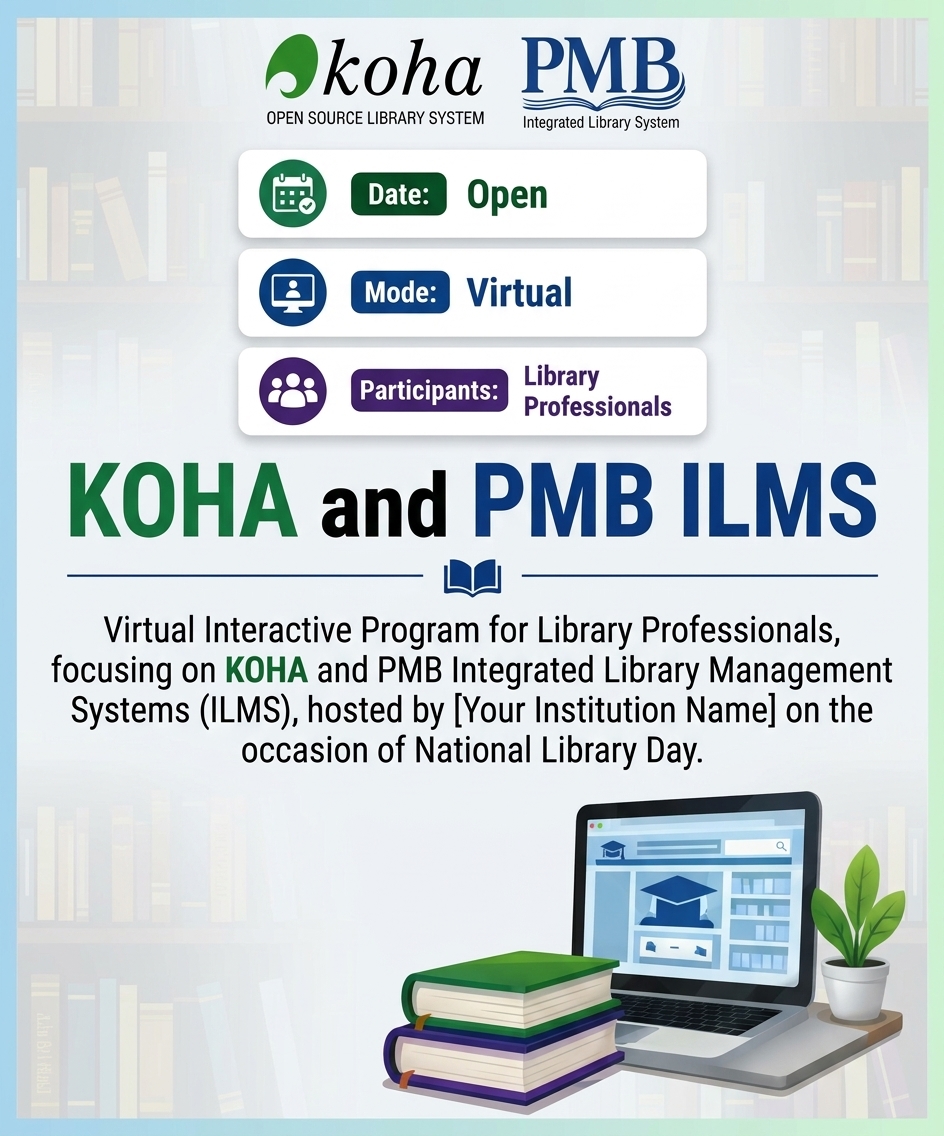
This course provides an introduction to library automation using PMB and KOHA, two widely used Integrated Library Management Systems (ILMS). Participants will learn how to automate essential library operations, including cataloguing, circulation, membership management, acquisitions, serials management, and Online Public Access Catalogue (OPAC) services. The course emphasizes practical skills in configuring, managing, and operating these systems to improve library efficiency, streamline workflows, and enhance access to information resources.

Course Overview
This course teaches participants how to build a digital library by integrating Koha (for library management) and DSpace (for digital repository management). Participants will learn to manage both physical and digital resources, catalog items, and provide seamless access to digital content.
Course Duration: 1 week / 2 hours daily
- Teacher: Admin1 NLA
- Teacher: Lila Nyaichyai
- Teacher: Manoj Kumar Sah
- Teacher: Bijaya Sharma

यो ३९० घण्टाको तालिम कार्यक्रममा जम्मा १३ वटा मोड्युल समावेश छन्। यसले पुस्तकालय सहायक (Library-Assistant) को पदका लागि आवश्यक सीप र ज्ञान प्रदान गर्छ। यस पाठ्यक्रममा उल्लेखित सीप/कार्यहरू प्रदर्शन गर्नका लागि सिद्धान्त र व्यवहारिक सत्र दुवै हुनेछ। प्रशिक्षार्थीहरूले यो कार्यक्रमका लागि आवश्यक सही उपकरण, सामग्री, उपकरणहरू र मेसिनहरूको प्रयोग गरेर सीप अभ्यास र अध्ययन गर्नेछन्।
यो कार्यक्रम सफलतापूर्वक सम्पन्न गरेपछि, प्रशिक्षार्थीहरूलाई सानो वा मध्यम आकारको पुस्तकालयलाई स्वतन्त्र रूपमा वा न्यूनतम व्यावसायिक पुस्तकालय विशेषज्ञको सुपरिवेक्षणमा सञ्चालन गर्न सम्बन्धित ज्ञान र सीप प्रदान गरिनेछ।
- Teacher: Jagadish Chandra Aryal
- Teacher: Nepal Library Association
- Teacher: Sanjib Kumar Chaudhary
- Teacher: Arun Kumar Rai
- Teacher: Prem Raj
- Teacher: Kamala Sharma